Introduction to Anaerobic Digestion and Co-Digestion
Anaerobic digestion (AD) is a biochemical process used to breakdown organic material into biogas, as well as stabilize organic waste and destroy pathogens in waste materials. AD has been used for decades in sewage treatment to treat organic sludges produced during mainstream wastewater treatment.
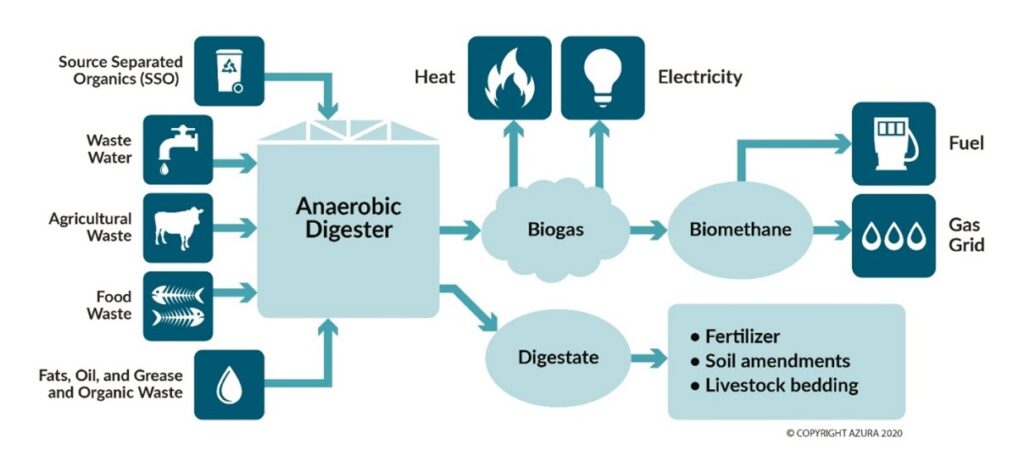
Co-digestion is a process that treats food waste and other organic waste together with sewage sludge at wastewater treatment plants. As the need to divert organic waste from landfills grows, co-digestion is gaining traction. Municipalities can use the additional capacity in existing wastewater assets as a cost-effective strategy to preserve landfill capacity and mitigates greenhouse gas emissions.
However, co-digestion is more complicated than simply feeding new material to digesters. There are several ancillary equipment components required to make co-digestion practical, including: systems for front-end feedstock receiving, biogas management, and digestate management.
1. Feedstock Receiving
Flexibility in feedstocks accepted for co-digestion begins with the facility’s feedstock receiving equipment. The right equipment enables a facility to accept solids, sludges, and liquid feedstocks, as well as packaged food products.
Receiving Buildings
While some food waste digesters have outdoor access to their receiving equipment, many new digester facilities are opting for covered buildings to contain their receiving equipment. This offers protection from the elements as well as odour control
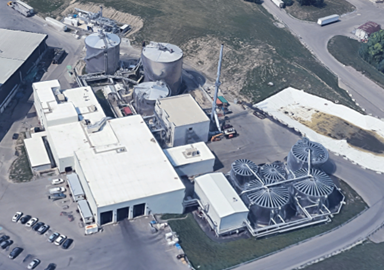
at the Dufferin Organics Digester in Toronto, Ontario.
Solids Receiving Equipment
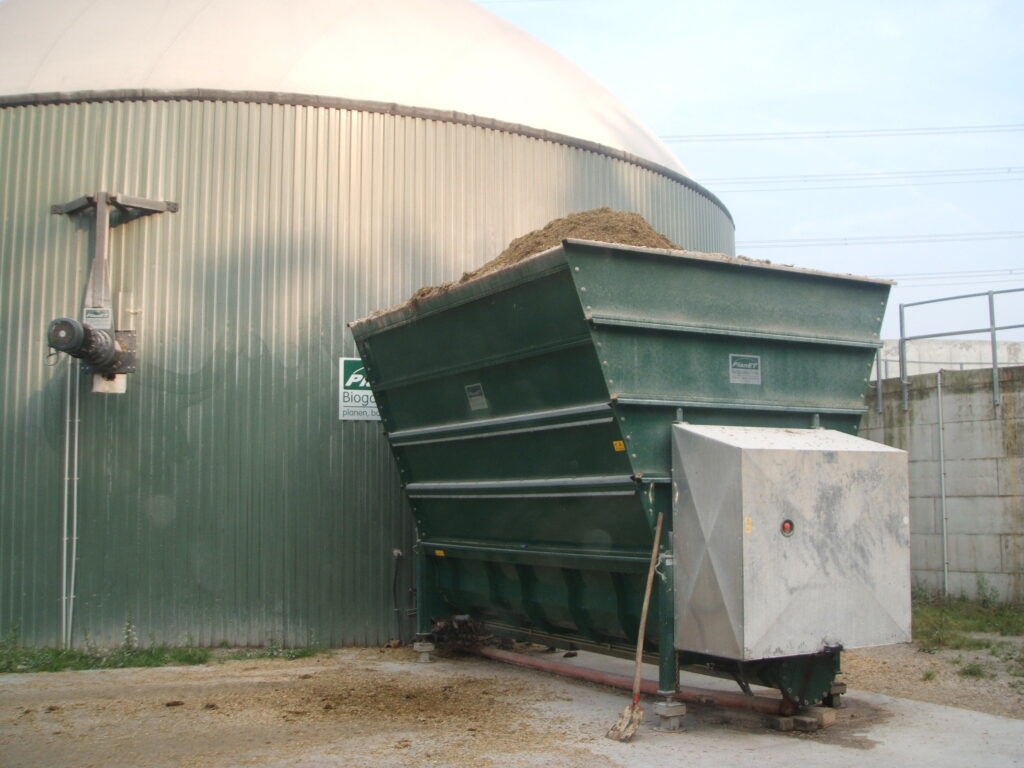
Most commonly in the form of a hopper and screw augers, a solids receiving line can be used for any pliable to non-flowable material, such as bulk fruits and vegetables, dry pack manure, agricultural residues, green bin materials, and sludge cakes.
Liquids Receiving Equipment
Liquid receiving typically uses either a pump-driven line to pump feedstock directly out of the trucks or a gravity-driven offload into an underground receiving pit or sump.
Depackaging Line
Any food waste arriving with packaging contamination will require a depackaging process to free the food inside containers and minimize packaging material that enters the digesters.
Many food waste digesters operate with a receiving bay dedicated exclusively to packaged food waste for process efficiency and to maximize the amount of packaged material they can receive.
Holding tanks
Intermediate holding and storage vessels are used to blend incoming material and maintain a constant feed rate, even on days when less or no material is delivered.
Storage tanks (and fermentation tanks) help to meter in high energy feedstock, like fatty DAF sludges, to mitigate organic shock loads that can upset the digester.
Ventilation and Odour Control
Odour control is critical to ensuring the success of any digester project. Unhappy neighbours lead to odour complaints, fines, and possibly forced-closure or redesign.
In a covered receiving building, ventilation is installed to maintain negative pressure in the buildings and prevent odours from escaping. Receiving bay doors are closed during offloading, fresh air is drawn into the bay, and all odour-impacted air is sent to an odour capture system like a biofilter or activated carbon scrubber.
Receiving tanks, pits or hoppers inside the receiving buildings are typically fitted with lids that remain closed when not in use. This provides an additional layer of odour control which can reduce the ventilation needs of the receiving building.
Considerations for Feedstock Blending
Since co-digestion blends multiple types of feedstocks, interactions between feedstocks in receiving tanks, holding tanks, fermenter tanks, and the digester itself may cause operational issues such as foaming or off-gassing.
Due to the possible chemical interactions, it can be beneficial to have multiple feedstock receiving tanks to separate certain feedstocks prior to mixing in the digester.
2. Feedstock Pre-Treatment
Pre-treatment impacts feedstock flexibility along with digester operations, specifically mixing, pumping, crust formation, and grit accumulation. Without adequate pre-treatment, some feedstocks may not be able to get into the digester or may lead to chronic operational issues.
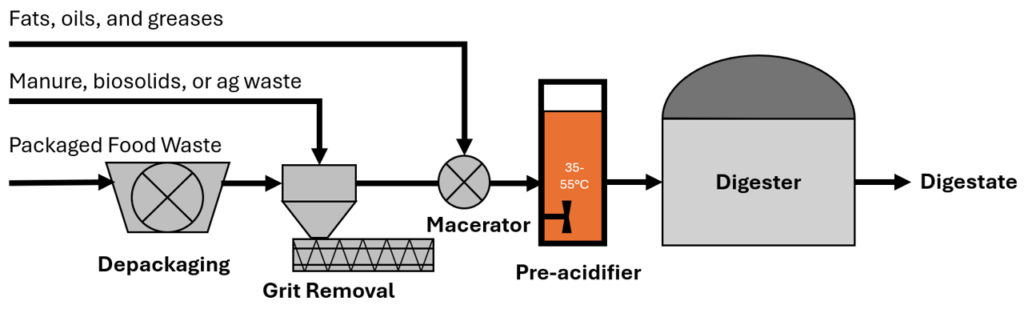
Depackaging
Depackaging systems typically include a method of breaking up glass, metal, and plastic and a method of separating the packaging pieces from the food waste. Some depackaging systems use digestate or process water to slurry feedstocks, and there is a wide range of performance at removing contamination, water use, energy use, and organics recovery between different technologies. Depackaging systems can be located at a wastewater treatment plant, however it is sometimes preferred to collocate at a waste transfer station or a dedicated depackaging station to reduce truck traffic and operational complexity around the digester.
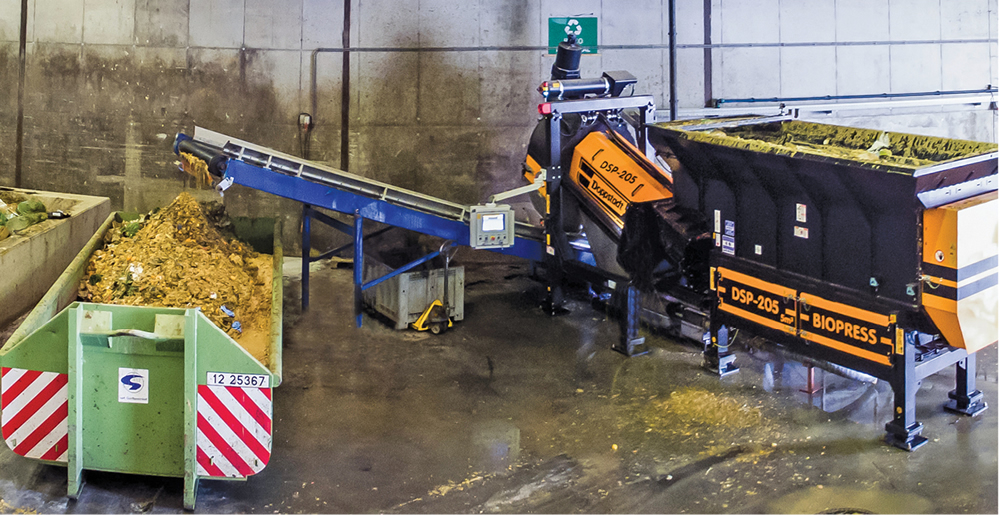
Shredding and Chopping
Long fibrous material can lead to crust accumulating on the surface of digesters or tangling in spinning equipment such as pumps and mixers. Shredding and chopping to reduce fibre size on the front-end helps to mitigate these issues and make the feedstock more pumpable and mixable.
Feedstocks that are chunkier also benefit from shredding and chopping by creating a homogenous feed slurry that is easier to pump and mix and is also faster to digest.
Grit Removal
Many food wastes contain both inorganic grit (sand, rocks, glass, etc.) and organic grit (seeds, shells, pits, and woody stems) that reduce the digester’s working volume.
It is necessary to either grind down or remove as much grit as possible to avoid accumulations. Without front-end grit removal, costly cleanout operations may need to be done every 2-3 years, however adequate grit removal can extend that time up to a decade.
Pasteurization
As some food wastes and residuals can contain harmful pathogens, it often required to pasteurize either the feedstock or digestate. Pasteurization on the front-end can also help pre-heat feedstock prior to digestion and maintain a stable digester temperature.
Pre-Fermentation
Pre-fermentation (or pre-acidification stage) prior to digestion has become a more popular configuration in food waste digesters. The fermentation stage serves to biologically pre-treat the feedstocks, emulsifying and hydrolyzing the feedstock, making the remaining methanogenesis stage occur quicker in the main digester.
This pre-treatment helps to both accelerate and stabilize the digester process, helping to avoid overfeeding upsets and to effectively equalize variability in the feedstocks.
3. Biogas Management, Treatment, and Upgrading
To make renewable natural gas or electricity from the additional biogas produced from co-digestion, the biogas handling train must be properly designed, accounting for parameters such as moisture and impurities that may corrode piping and handling equipment.
Moisture Control
Moisture and humidity can damage digester equipment. In cold-climate digesters, moisture accumulation and freezing can block pipes, create leaks, as well as obstruct sampling points and inline analytical equipment.
Bulk moisture may be removed and collected via cooling fields, condensate traps, and knockout drums. Collected moisture must also be managed either by recycling the water back to the headworks or discharging through a separate treatment and disposal pathway.
High humidity can significantly impact the lifespan of biogas purification technologies like membranes and activated carbon scrubbers for renewable natural gas (RNG) applications. Reducing relative humidity requires chillers and compressors to condense the remaining moisture.
Scrubbing and Adsorption
To remove trace impurities, such as hydrogen sulfide (H2S), from the biogas prior to upgrading to RNG, biogas will commonly be put through a scrubber or adsorption column. Typically, this will be an activated carbon scrubber or regenerated adsorption media.
Biofilters see limited application in RNG applications as they require the addition of oxygen for bacteria in the biofilter. Any residual oxygen and nitrogen would then need to be removed from the product RNG to meet pipeline quality specifications.
Biogas Utilization and Energy Recovery
Biogas may be used to generate heat and/or electricity to use directly onsite or elsewhere.
Boiler
Biogas may be used for steam generation or water heating either onsite for digester heating and building heating or for nearby residential and commercial heating. Heat is the least valuable use of biogas, but boilers are easily scalable and can make economic sense at almost any scale.
Electricity and Combined Heat and Power
Biogas engines for producing electricity or combined heat-and-power (CHP) are used for producing renewable electricity using digester biogas. The renewable electricity may be used directly onsite or it can be sold to the local utility to make revenue for the digester site.
Engines and CHP units come with a wide variety of sizes making them cost effective for biogas use with small and large biogas volumes alike. All wastewater treatment plants use a lot of electricity, primarily for aeration, and generating a portion of that electricity on site can help the site meet its sustainability goals.

Natural Gas Upgrading
A growing trend is upgrading biogas to renewable natural ga (RNG) and injecting into the local natural gas grid. Producing RNG will help municipalities move towards achieving their climate goals either by generating credits under the clean fuel regulations, or by avoiding the purchase of fossil-based fuel for heating municipal buildings and fueling municipal fleets.
RNG upgraders are expensive systems, typically costing several million dollars for even the smallest systems, so very large volumes of biogas are required to make producing RNG economically viable.
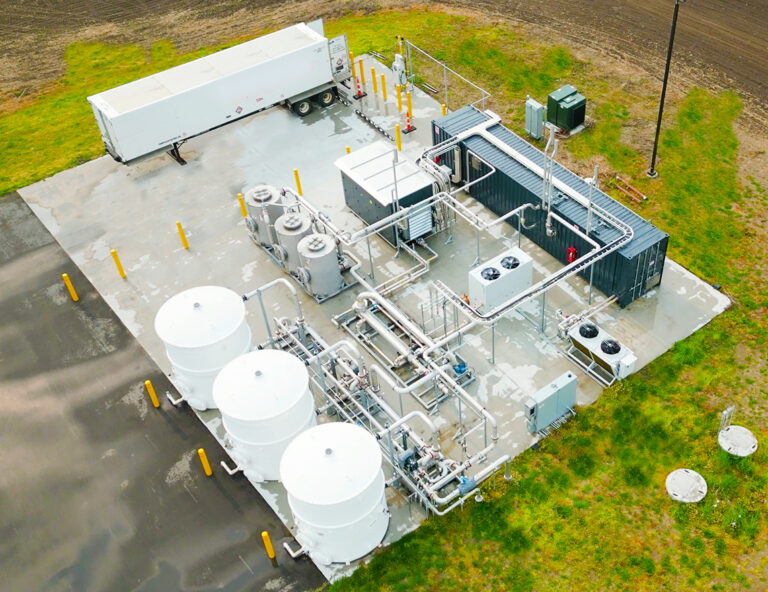
4. Digestate Management, Treatment, and Land Application
Adding a co-digested feedstock to a digester will increase the digestate volume remaining that must be managed. The extent of treatment and other post-digestion processing of the digestate before final disposal or beneficial reuse depends on several factors:
- Compliance with foreign matter content regulations in biosolids
- Nutrient application limits on agricultural land
- Land application regulations regarding heavy metals, PFAS, and other regulated pollutants
- Necessary trucking distance and cost to haul away digestate
- Returned nutrient load to the wastewater plant headworks.
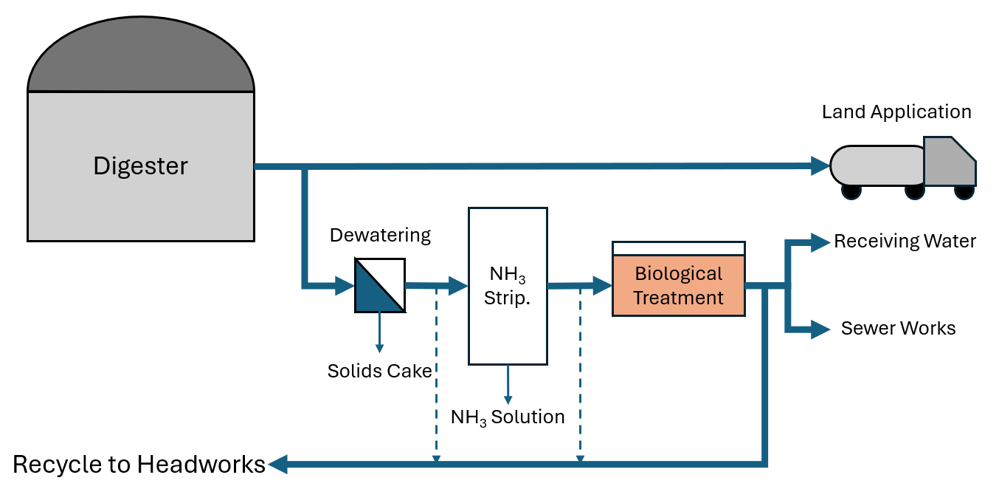
Screening
For biosolids to pass compost quality requirements, foreign matter (ex. packaging and fibres) must be removed. A fine screen in the 1-2 mm range size may be used to remove these materials.
Dewatering
Most stand-alone food waste digesters in Canada opt to truck away whole digestate for land application. Digestate dewatering is standard practice at wastewater digesters, with the water fraction being recycled back to the headworks.
Dewatering is commonly performed using centrifuges or presses and the use of polymers to enhance solids capture. Co-digestion can improve solids capture because some fibrous material from the food pulp creates a natural plug in the press or the mass of large particles in the centrifuge helps capture smaller fine solids.
Drying and Pelletizing
Following dewatering, the remaining cake solids may be further processed by drying and pelletizing to make the solids easier to store, more marketable as a soil amendment, and compatible with land application equipment used by farmers.
Due to the cost and minimal additional revenue generation, food waste digestate is very rarely dried and pelletized. Because the field application of biosolids is more restricted, these processes should be considered as part of co-digestion operations.
Nutrient Recovery
To recover ammonia for use as a fertilizer, ammonia scrubbers are becoming more commonplace. Struvite precipitation has also been used at a few facilities but not adopted as widely or growing as quickly as ammonia recovery.
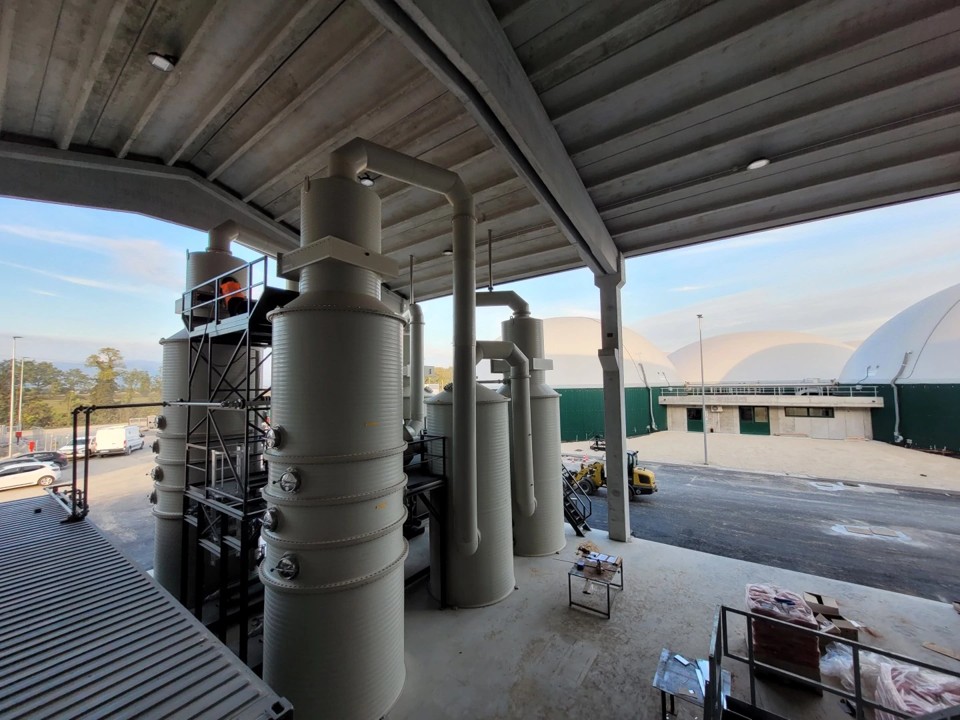
The benefit of nutrient recovery for a co-digestion facility is the reduced cost of aerobic treatment of nutrients that are returned to wastewater treatment plant headworks.
Unlike drying and pelletizing, nutrient recovery can generate a higher value fertilizer product while simultaneously reducing operating costs, making their use more cost efficient and appealing to some digester projects.
Sidestream Biological Wastewater Treatment
Finally, if the ammonia load returned to the headworks is too high and land application regulations prevent land applying whole digestate, it may be necessary to use aerobic biological wastewater treatment to pretreat digestate before it is returned to the headworks.
The few cases where sidestream biological treatment may be appropriate, are typically either:
- In urban locations, far from farmland with higher biosolids management costs;
- Existing aerobic treatment is at or near capacity; or
- Minimizing plant wide energy use outweighs capital costs.
Conclusions
Considering all the optional and/or required equipment needed for co-digestion, it is important to consider what feedstocks may be accepted at a co-digestion facility, what the fate of the additional digestate produced will be, and what scale of biogas volume will be generated to determine the best biogas use case.
This article was published in the May/June 2026 Edition of Environmental Science & Engineering Magazine and is based on the presentation that Michael delivered during the technical sessions of the WEAO Conference in April 2026.
Related Articles
Podcast: Codigestion Benefits and Considerations
Azura’s Dave Ellis was invited to join Anna Simet on the Biomass Magazine Podcast to talk about municipal codigestion. Municipal sewage sludge codigestion blends organic waste into existing anaerobic digesters to produce biogas and it is a great option to help reduce the carbon intensity of our fuel system. Listen to the Podcast.
From Trash To Treasure: Maximizing Renewable Fuel with Codigestion
The only currently established, potentially carbon-negative fuel in the world is energy produced from waste. As we seek to reduce our carbon footprint, codigesting food waste at sewage treatment plants presents an excellent opportunity to maximize existing resources and create a more sustainable future. Read the full article.
Get Insights from the Bioprocess Experts Right to Your inbox
Sign up to the Discover Digesters Newsletter to access Azura’s best practices, field-tested advice, and insights into the anaerobic digestion & industrial wastewater treatment industries.
By submitting this form, you are consenting to receive marketing emails from: Azura Associates. You can revoke your consent to receive emails at any time by using the SafeUnsubscribe® link, found at the bottom of every email. Emails are serviced by Constant Contact.